
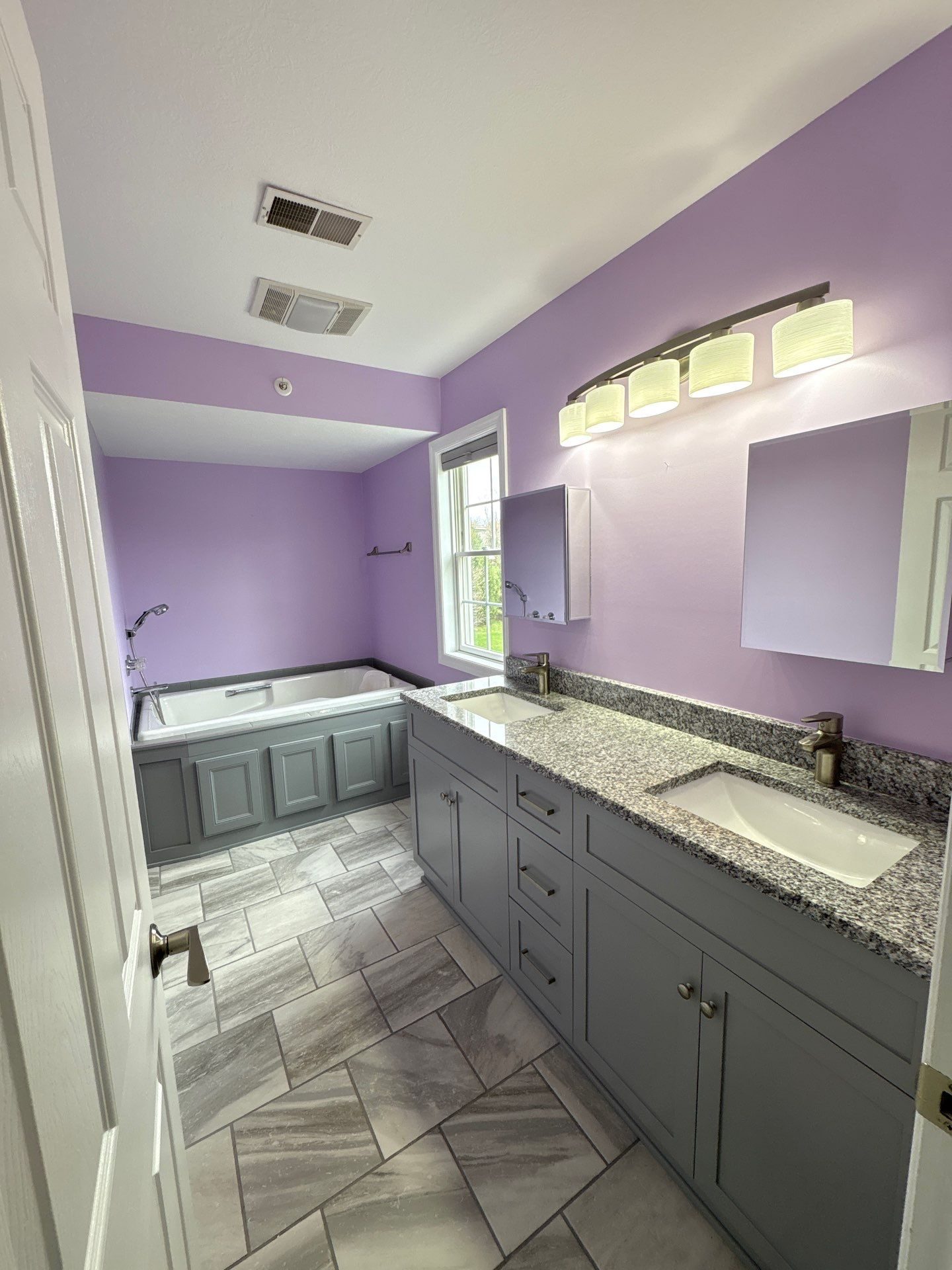
A bathroom doesn't have to be damaged to be worth repainting. This one in Canonsburg was in good shape when Weiser Painting Co. walked in. It just didn't look like the room the owners wanted. Here's how a single painter, four hours and two coats of lilac changed that.
Before: A Clean Bathroom That Still Felt Dark
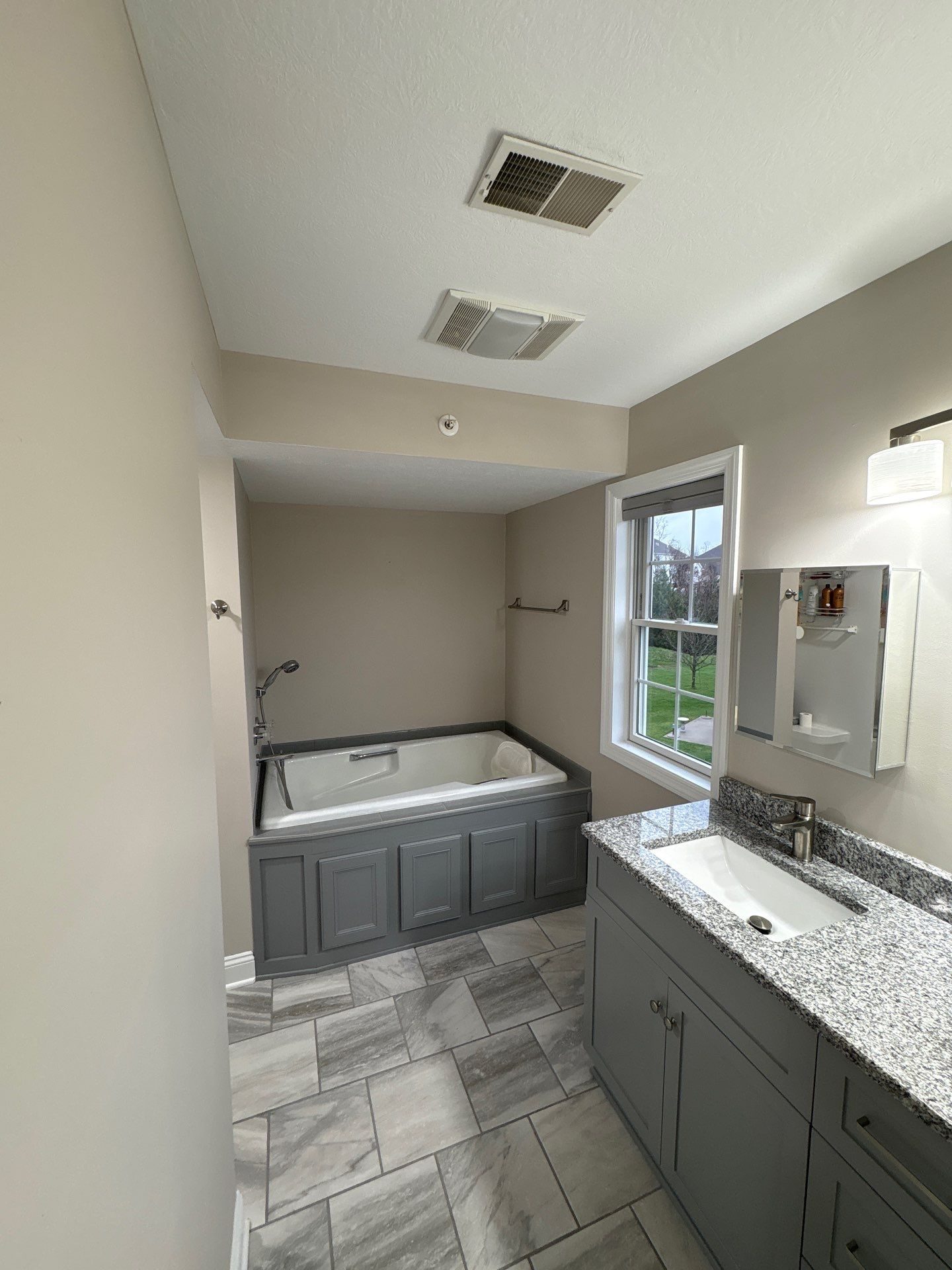
Nothing was wrong with this bathroom in the usual sense. The walls were sound, the vanity and counter were in good condition, and the room had been looked after. New owners had taken over the home, and the bathroom was one of the spaces they wanted to put their own stamp on.
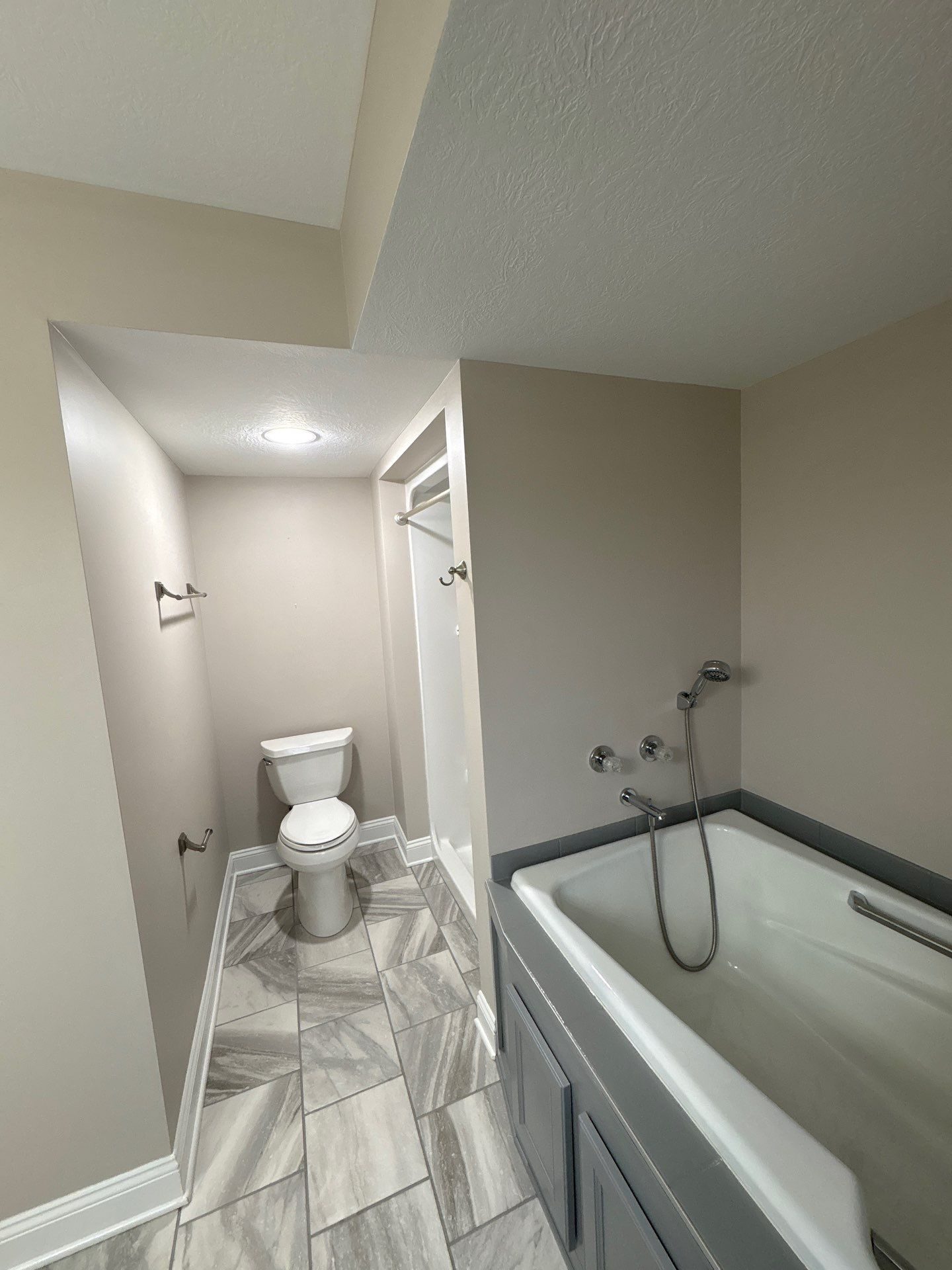
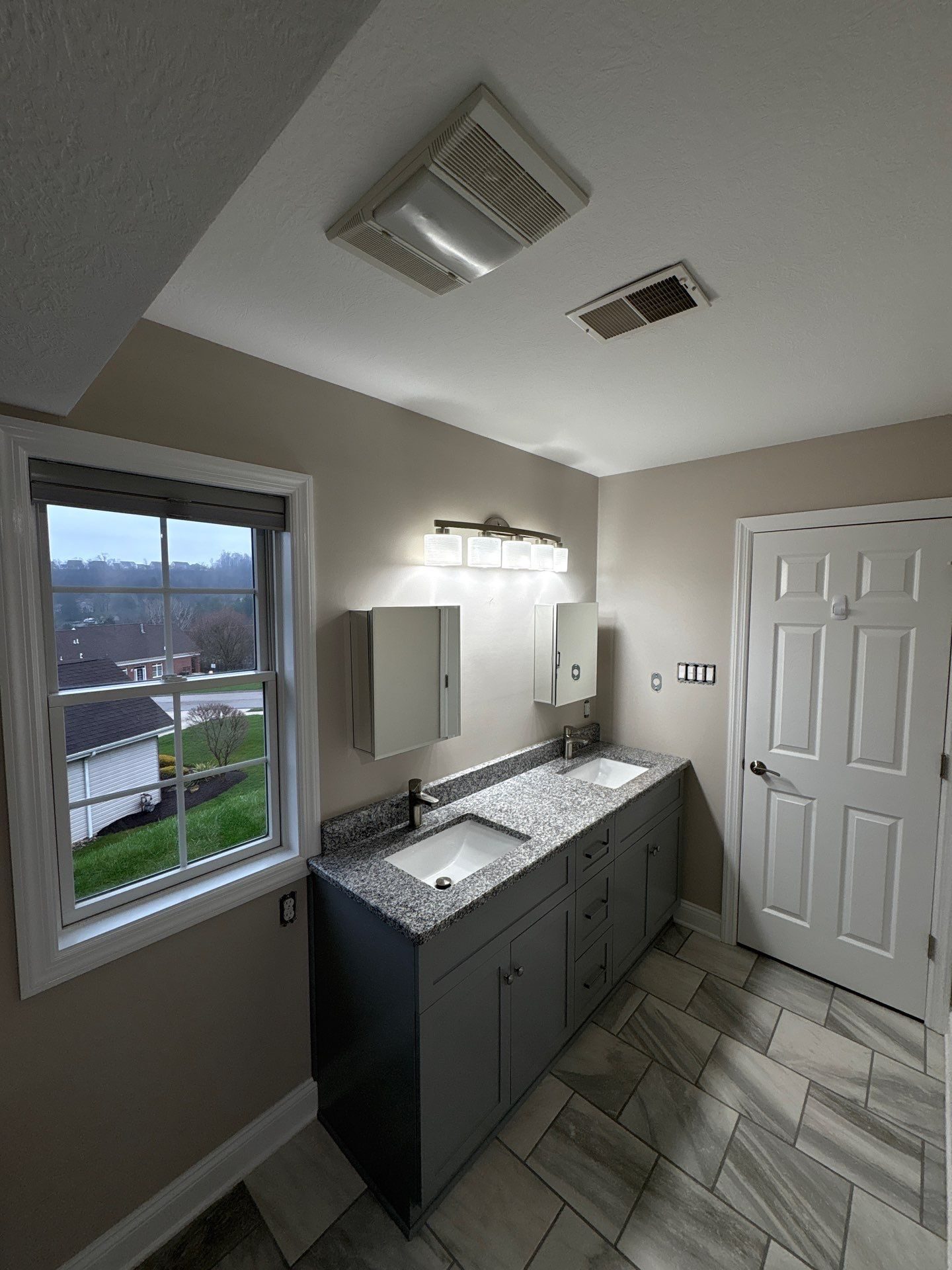
Tan covered the walls. The vanity, the tub surround and the tile sat in that same muted, neutral range. Everything matched, and that was the problem. With so little separation between the walls and everything in front of them, the room read as one flat block of color. Light bounced around without landing on anything, and the whole space felt heavier than its square footage suggested.
The owners had already decided where they wanted to go. Lilac towels, a lilac shower curtain, lilac rugs and accessories were in place, picked out and ready. What they didn't have yet was a wall color to hold all of it together. The accessories were doing the work on their own, sitting against a tan backdrop that fought them instead of framing them.
That's the situation Weiser Painting Co. was called in to fix. Not a repair job. A color job, with a clear target the homeowners had already set.
The Problem: Low Contrast and a Color That Had to Be Covered
Two things had to be solved on this project, and the second one is the part most people don't think about until the first coat goes on.
The first was contrast. Tan walls against gray cabinetry and gray tile gave the eye nowhere to rest. Bathrooms are small rooms by nature, and small rooms depend on contrast to feel open. Take the contrast away and the walls close in, no matter how clean the space is or how much natural light comes through the window. Brightening the room meant moving the walls decisively away from the color family everything else was sitting in.
Coverage was the second. Going from a darker, warmer tan to a soft lilac is a bigger jump than it sounds. Light colors have less pigment load than deep ones, which means a single coat over a darker base tends to look patchy, uneven, or faintly muddy where the old color shows through. You can see it most clearly in corners and along edges where the roller lays down less paint.
The homeowners raised this concern directly before work started. They didn't want a finish that looked fine on day one and then revealed streaks of the old tan once the paint dried and the light changed through the afternoon. That concern shaped the plan for the job.
The Solution: Two Coats of Emerald in Rhapsody Lilac
Rob handled this project start to finish, from masking through final coat. Here's how the day was built.
Matching the Wall Color to Decor the Owners Already Had
The color was chosen to work with what was already in the room rather than compete with it. Sherwin-Williams SW 6828 Rhapsody Lilac picks up the same tone running through the towels, curtain and rugs, so the walls read as part of the scheme instead of a backdrop that happens to be purple.
Picking a wall color around existing decor is easier than the other direction, because the accessories give you a fixed reference point. The lilac had to be soft enough to brighten the room without overwhelming a small space, and close enough to the accessory tones that nothing clashed under bathroom lighting.
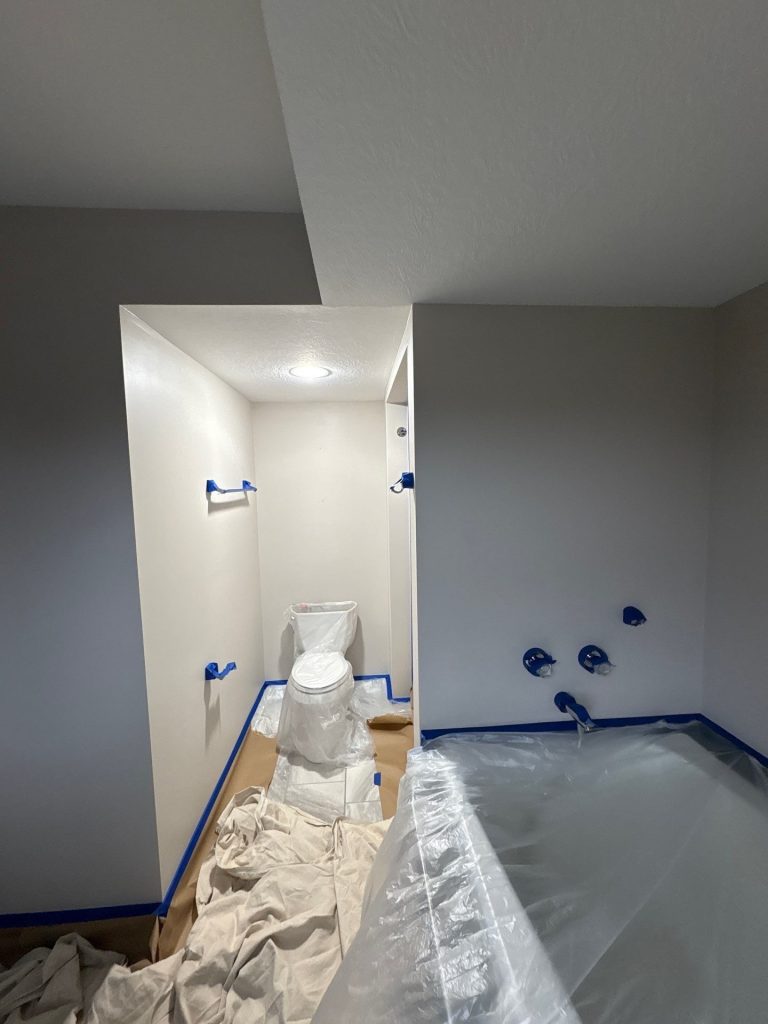
Masking Trim, Fixtures and Everything That Wasn't Getting Painted
Prep on a bathroom is mostly about protection. The room is small, the surfaces are hard, and everything in it is something you don't want paint on.
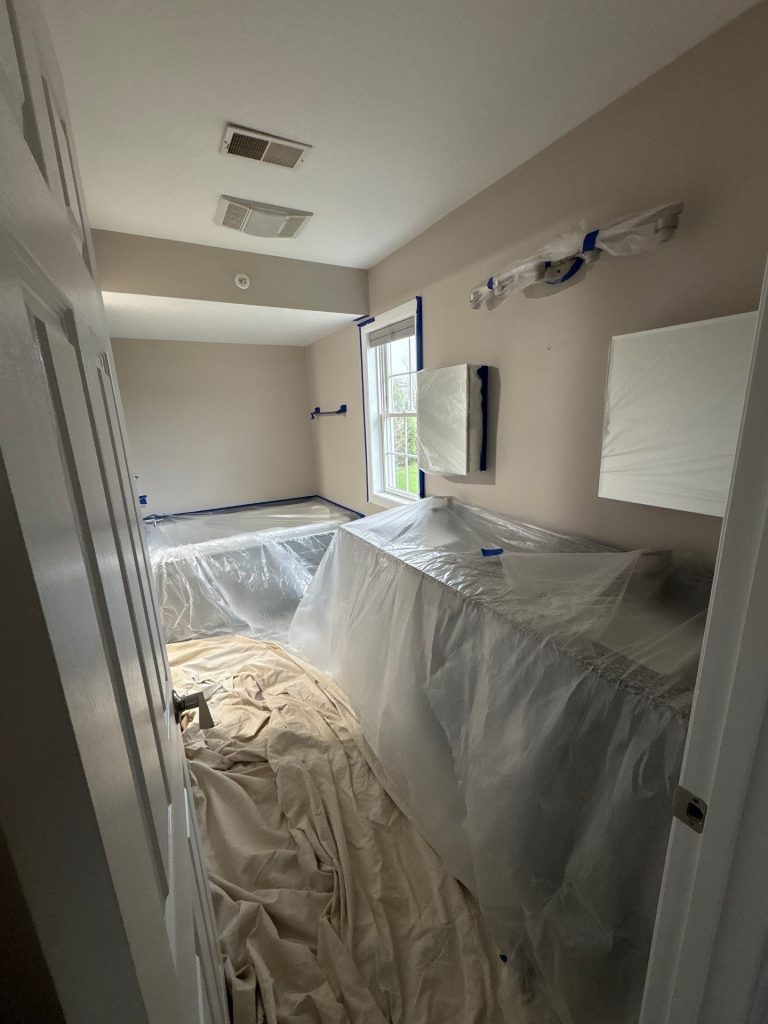
FrogTape went down along the trim and around the fixtures. It held a clean line through two coats and came off without damaging the trim. Plastic covered the sink, the toilet and the mirror. By the time the first brush came out, the only thing exposed in the room was wall.
This is also the step that makes a walls-only scope possible. The trim, the ceiling and the fixtures on this project weren't painted. Clean masking is what keeps that line sharp instead of leaving a job that needs touching up somewhere else.
Two Full Coats, So the Old Color Stays Gone
Two coats were planned from the start, specifically because of the color change the homeowners were worried about.
The first coat does the heavy lifting of breaking up the tan. The second builds the film to full depth and evens out the sheen, so the finish looks the same across the whole wall rather than lighter in the middle of a roll and darker at the overlaps. Done properly, the old color doesn't read through at any point on the wall, in any light, at any time of day.
Brush and roll was used throughout. In a bathroom with fixtures in place, a mirror on the wall and tight corners around a vanity, a brush and roller give you more control than spraying would, and there's no overspray to chase down afterward. Cut in with the brush, fill with the roller, repeat for the second coat.
In and Out in One Day
The full project took about four hours with one painter. One day, start to finish, which means the bathroom was back in service the same day it was masked off.
Short timelines on small interior rooms come down to prep and sequencing rather than rushing the paint. The masking was done once and done properly, the two coats went on in sequence with the right time between them, and the plastic and tape came off at the end of the same visit.

Before & After: Tan to Rhapsody Lilac in Canonsburg
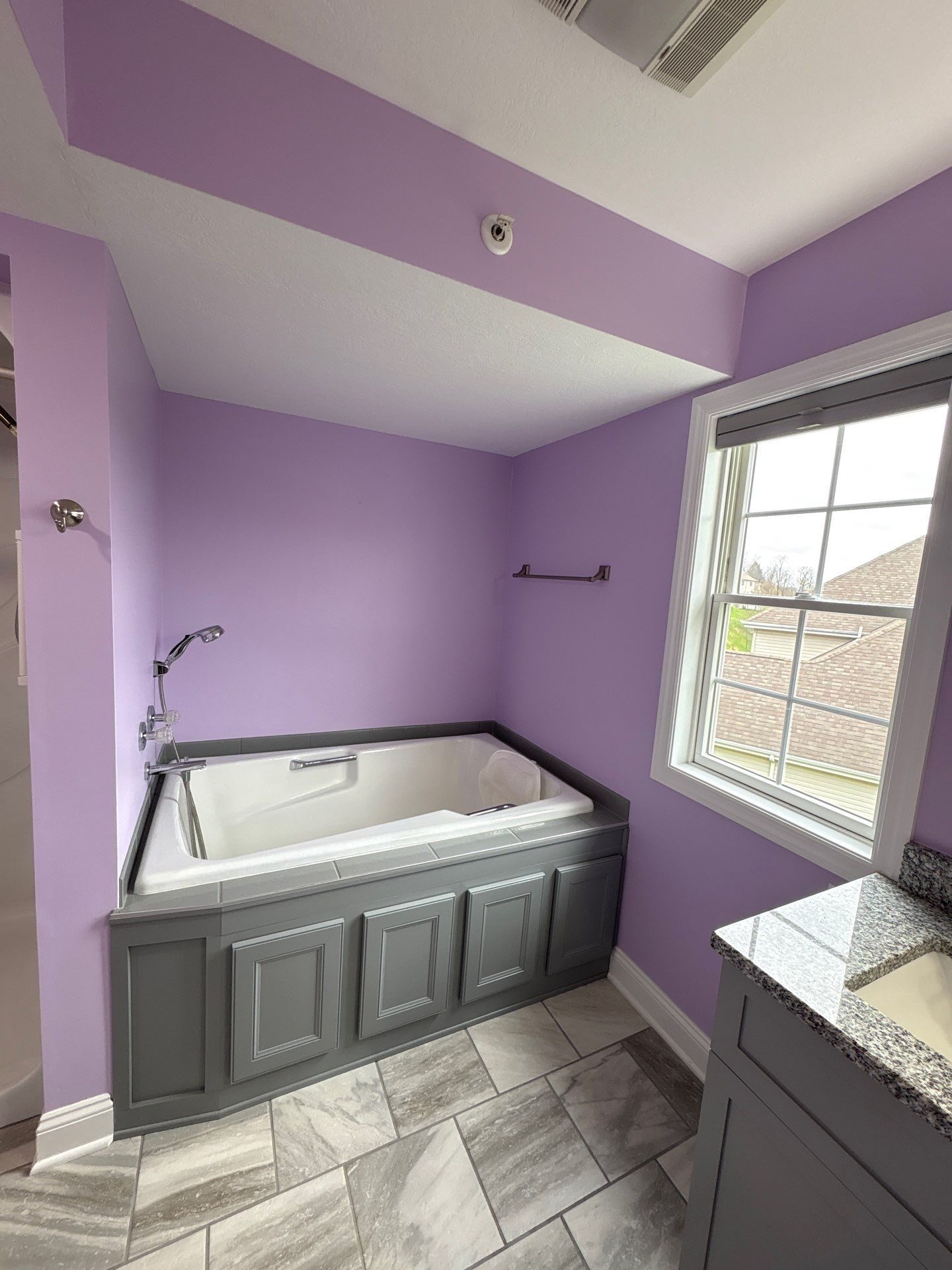
Same walls, same fixtures, same window. Only the paint changed. Look at the vanity wall and the tub wall side by side and you'll see how much the tan was pulling the room down.
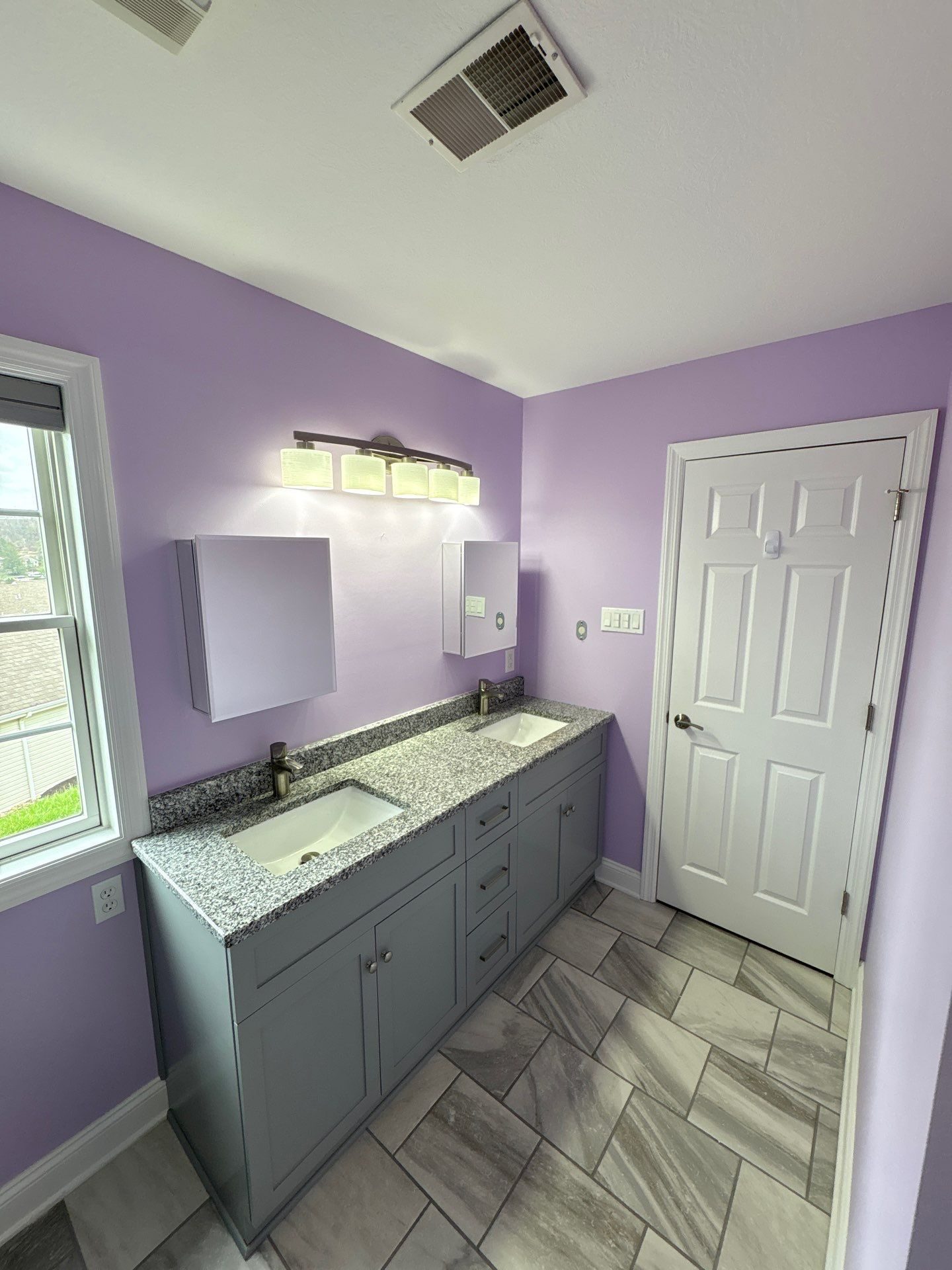
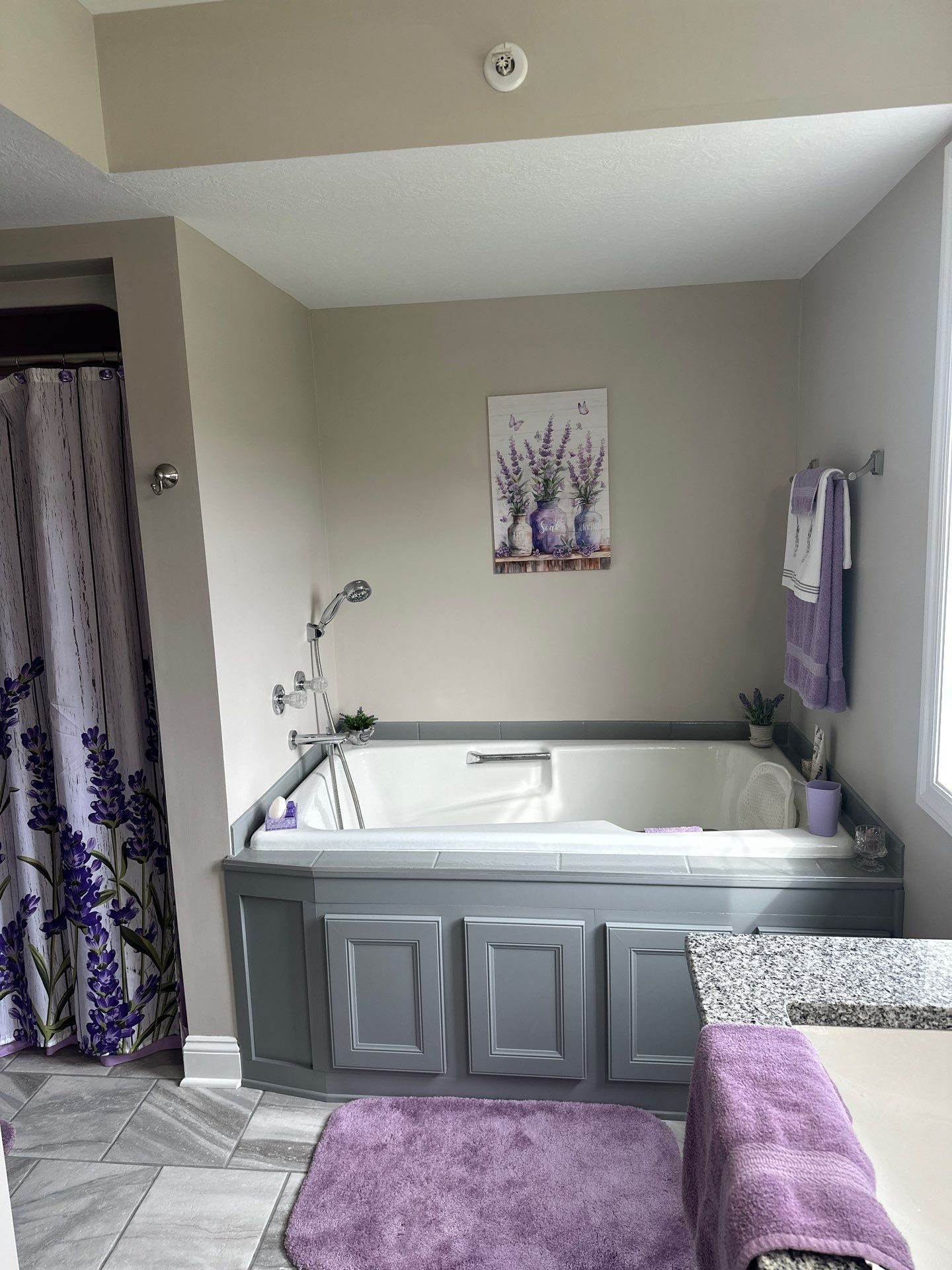
After: A Bright Room That Matches the Rest of the Decor
The tan is gone. In its place, soft lilac walls that lift the whole room and finally give the towels, curtain and rugs something to sit against.
Light is the change you notice first. Moving the walls out of the warm neutral range and into a lighter, cooler tone gave the fixtures something to stand against, and the contrast that was missing is now doing its job. The vanity and counter read as separate from the walls. The window feels like it's contributing more. The room looks bigger without a single thing having moved.
The second change is cohesion. Everything the owners had already chosen now belongs to a single scheme instead of floating against a mismatched background. That was the whole goal of the project, and it's the part the finished photos show best.
Coverage held up too. Two coats of Emerald in Rhapsody Lilac left no trace of the tan underneath, with an even finish across every wall.
Customer Review
"Rob arrived promptly. He was very courteous and did an amazing job! I am very pleased."
Location: Canonsburg, PA (North Strabane Township, Weavertown Woodlands)
This project was completed in the Weavertown Woodlands residential plan in Canonsburg, PA, within North Strabane Township in Washington County.
Canonsburg is one of the communities Weiser Painting Co. serves across Washington and Westmoreland counties, along with Pittsburgh, the South Hills and nearby towns like McMurray, Bethel Park and Washington. If you're in or around Canonsburg and you've got a room that needs the same kind of straightforward color change, you'll find more about painting services in Canonsburg, PA or can look through the full list of towns Weiser Painting Co. covers.
Products and Techniques Used
Everything that went into this project, in one place.
Paint: Sherwin-Williams Emerald Interior, satin finish. Emerald is Sherwin-Williams' premium interior line, which is the reason it gets specified on bathroom work. Satin is the right sheen for a bathroom wall: it holds up to moisture and wipes clean, without the glare a semi-gloss throws across a small room.
Color: SW 6828 Rhapsody Lilac. A soft lilac, chosen to tie the walls to the decor the homeowners already owned.
Coats: two. Planned from the start to fully bury the darker tan underneath, which was the homeowners' main concern going in.
Application: brush and roll. Cut in by hand, rolled out across the field. The right call in a small room with fixtures staying in place.
Prep and protection: FrogTape on trim and fixtures, plastic over the sink, toilet and mirror. The tape kept the lines crisp through both coats and came off clean, with nothing damaged on removal.
Scope: walls only. Trim, ceiling and fixtures were masked and protected, not painted.